

When I worked as a QA Engineer, I thought Security Testing is just one domain. But when I started learning about Cybersecurity, I got to know that it is ocean of information. People might think that Hacking is Cybersecurity, if we learn to hack systems, we will become cybersecurity engineers. But there is so much depth in this statement which we will explain in this post.
First let’s learn what is Cybersecurity. It is the practice of protecting networks, systems, applications, and digital assets from unauthorized access, cyberattacks, malware, and data breaches. It ensures the confidentiality, integrity, and availability (CIA) of information while supporting secure and sustainable digital infrastructure.
Cybersecurity does this in several ways: protecting sensitive data through encryption, authentication, and access control; securing networks and systems against malware, ransomware, and other cyber threats; supporting safe digital transformation through secure cloud and IT infrastructure; reducing downtime, resource misuse, and operational risk caused by attacks; and improving the overall reliability and resilience of modern digital systems.
What Are Cybersecurity Domains?
Cybersecurity domains are the different focus areas in which cybersecurity methodologies are applied — spanning everything from high-level governance to hands-on technical defence. Application security, physical security, risk assessment, and threat intelligence are among the most widely recognized domains. Organizations typically structure their cybersecurity policy around these domains, which is why they’re often referred to as areas of cybersecurity policy.
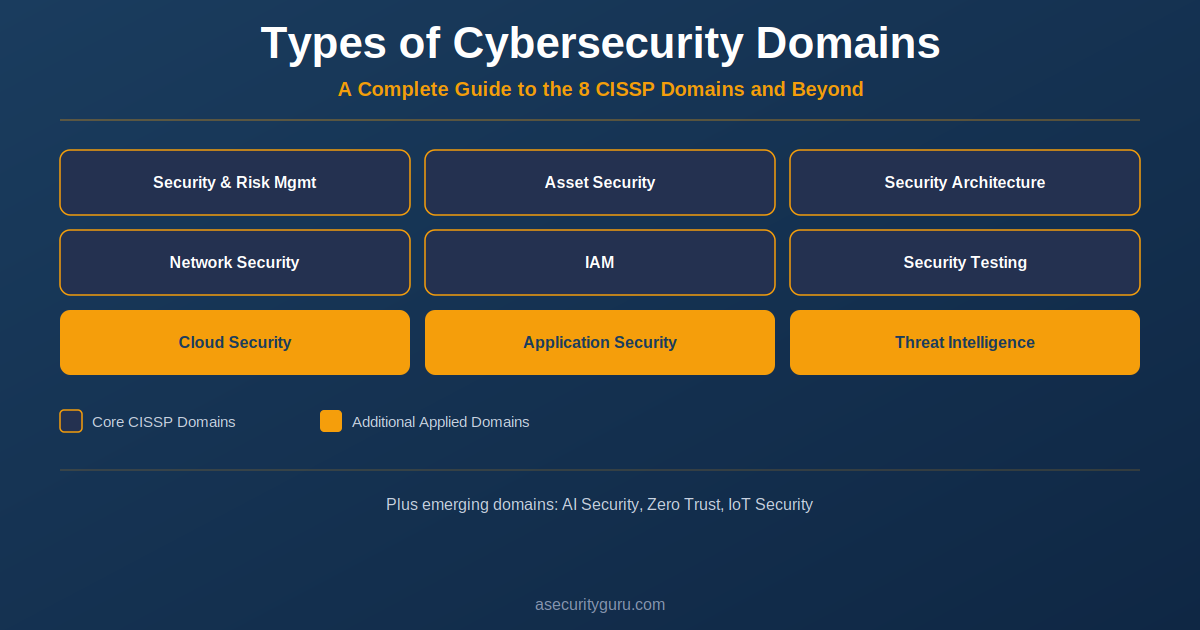
The most universally recognized framework for these specializations is the ISC2 CISSP Certification Domains — 8 domains that together encompass the breadth of the cybersecurity field.
Core CISSP Domains
Security and Risk Management Covers foundational governance, legal regulations, compliance, ethics, and the CIA triad (Confidentiality, Integrity, Availability). The NIST Cybersecurity Framework (CSF 2.0) is one of the most widely adopted references for structuring this domain in practice.
Asset Security Deals with data classification, handling, and protecting sensitive corporate and personal information throughout its lifecycle.
Security Architecture and Engineering Covers designing secure systems, evaluating security models, and implementing cryptography.
Communication and Network Security Focuses on securing physical networks, transmission media, and wireless communications.
Identity and Access Management (IAM) Controls who and what can access organizational resources through authentication and authorization.
Security Assessment and Testing Involves vulnerability management, conducting audits, and penetration testing.
Additional Applied Domains
Beyond the foundational CISSP framework, modern cybersecurity practice is frequently divided into additional technical and operational areas:
Cloud Security Protecting data, applications, and infrastructure hosted on public or private cloud platforms.
Application Security Mitigating vulnerabilities within software using tools like source code scanning and runtime protection. The OWASP Top 10 is the standard reference for the most critical web application security risks.
Threat Intelligence Gathering and analysing data about emerging cyber threats to anticipate and proactively block attacks.
Emerging Trends in Cybersecurity
Cybersecurity is constantly evolving to address new threats and technologies. A few trends shaping the field right now:
Rise of AI and Machine Learning — AI-powered tools help detect, analyse, and respond to cyber threats more quickly and accurately than manual processes alone.
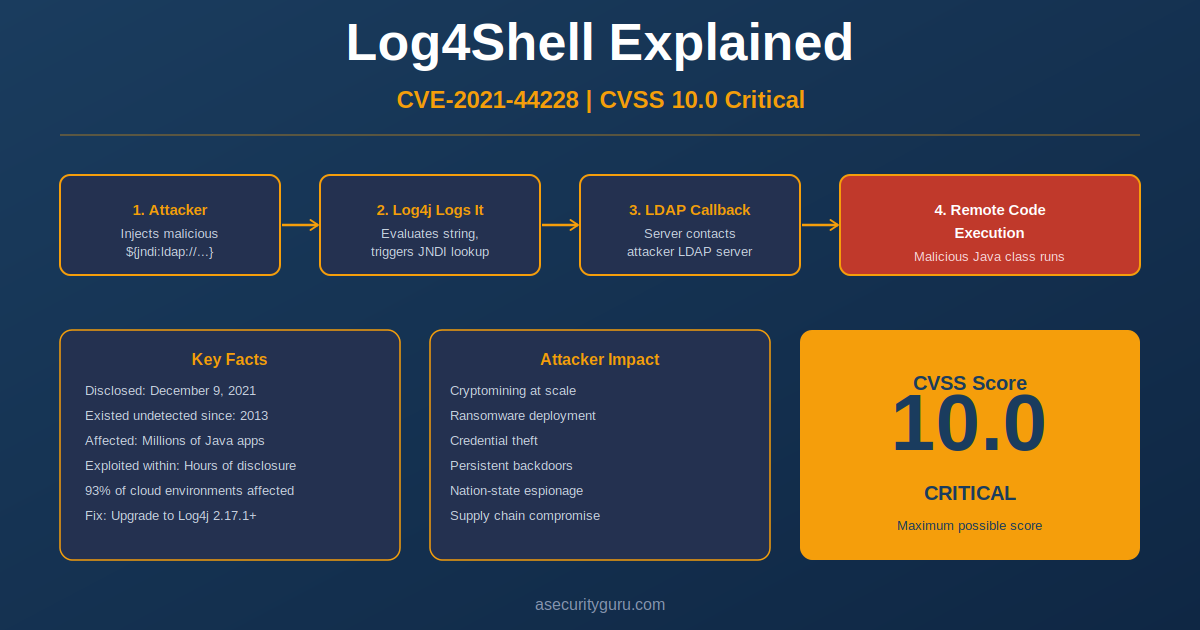
Rising Ransomware Attacks — Ransomware continues to grow as a threat, making regular backups and strong security measures essential. A vulnerability as severe as Log4Shell (CVE-2021-44228) — a CVSS 10.0 flaw — shows how a single unpatched dependency can open the door to exactly this kind of attack.
Cloud Security — As cloud adoption increases, organizations are placing more focus on securing cloud data and applications.
IoT Security Challenges — Connected devices create new security risks, requiring stronger protection and regular updates.
Zero Trust Security — Zero Trust verifies every user and device before granting access, reducing the overall attack surface.
AI Security — AI Security ensures that AI systems/models are free from vulnerabilities and compliance risks.
Common Cybersecurity Challenges
Generally, the organizations struggle to convince their leaders to spend more on security so that individuals can be trained on security, there is enough manpower to handle various vulnerabilities, patches are applied and verified on time and so on. We have discussed some of the common challenges in detail here:
Evolving Threats — Attackers constantly develop new methods. Keeping systems updated and monitoring continuously is the only sustainable defence.
Limited Budgets — Security tools and talent are costly. Prioritizing critical assets and using cost-effective, risk-based approaches helps stretch limited resources further.
Insider Threats — Misuse of legitimate access remains one of the hardest risks to detect. Strict access controls and ongoing monitoring of user activity are essential.
Complex Technology — Cloud, IoT, and hybrid environments increase overall complexity. Simplifying systems where possible and conducting regular security audits helps keep this manageable.
For practical guidance on where to start, the CISA Cybersecurity Resources hub is a strong, regularly updated reference.
Frequently Asked Questions
Are the CISSP domains the only way to categorize cybersecurity? No. CISSP’s 8 domains are the most widely recognized framework, but other models exist — including NIST’s framework functions and various vendor-specific categorizations. CISSP remains the most common reference point because of its broad industry adoption.
Do I need to specialize in one domain, or learn all of them? Most cybersecurity careers eventually specialize in one or two domains (e.g., Application Security or Cloud Security), but a working understanding of all the domains is valuable early in a career, since they overlap constantly in real environments.
Which cybersecurity domain has the highest demand right now? Cloud Security and Application Security are seeing particularly strong demand as organizations continue migrating infrastructure to the cloud and shipping more software faster. AI Security is also emerging rapidly as a distinct, high-demand specialization.
How are these domains different from cybersecurity frameworks like NIST CSF? Domains describe areas of focus (what you’re protecting and how). Frameworks like NIST CSF describe a structured process for managing risk across those domains. They work together rather than competing with each other.
Next Steps
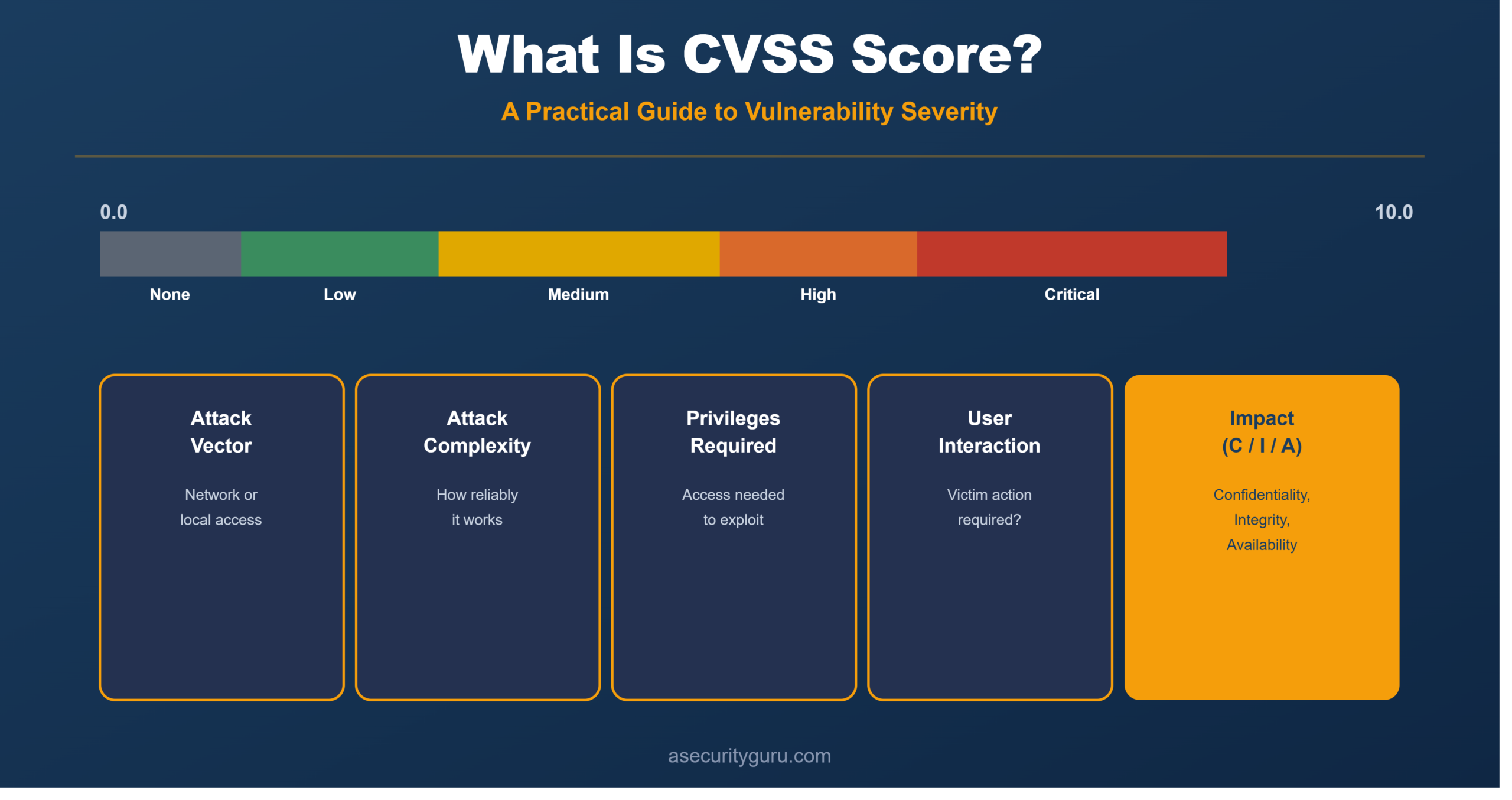
Understanding the cybersecurity domains is the foundation for deciding where to specialize. If application security and DevSecOps interest you, explore What Is CVSS Score? and Master GitOps with Terraform, AKS and AWS for hands-on technical depth. If AI Security is the direction you want to go, start with AI Security 101.
For structured, hands-on learning across these domains — DevSecOps, Application Security, and AI Security — explore Raghu’s courses on Udemy.
Sources and References
- ISC2 CISSP Certification Domains
- NIST Cybersecurity Framework (CSF 2.0)
- OWASP Top 10 Web Application Security Risks
- CISA Cybersecurity Resources
- ASecurityGuru: What Is Cybersecurity?
- ASecurityGuru: Log4Shell Explained (CVE-2021-44228)
Raghu the Security Expert has 20 years of experience in Security, DevSecOps, AI Security, and Penetration Testing. He has helped 80,000+ students upskill themselves in DevSecOps, Application Security, and AI Security. Follow his work on LinkedIn, YouTube, and Udemy.
Cloud security is definitely a huge area to keep an eye on – the complexity is growing so fast.